2025-11-15 / 8 min / Research + LLMs + Hugging Face
Cache Atlas and research as a product surface
Turning LLM caching experiments into something readable, testable, and shareable.
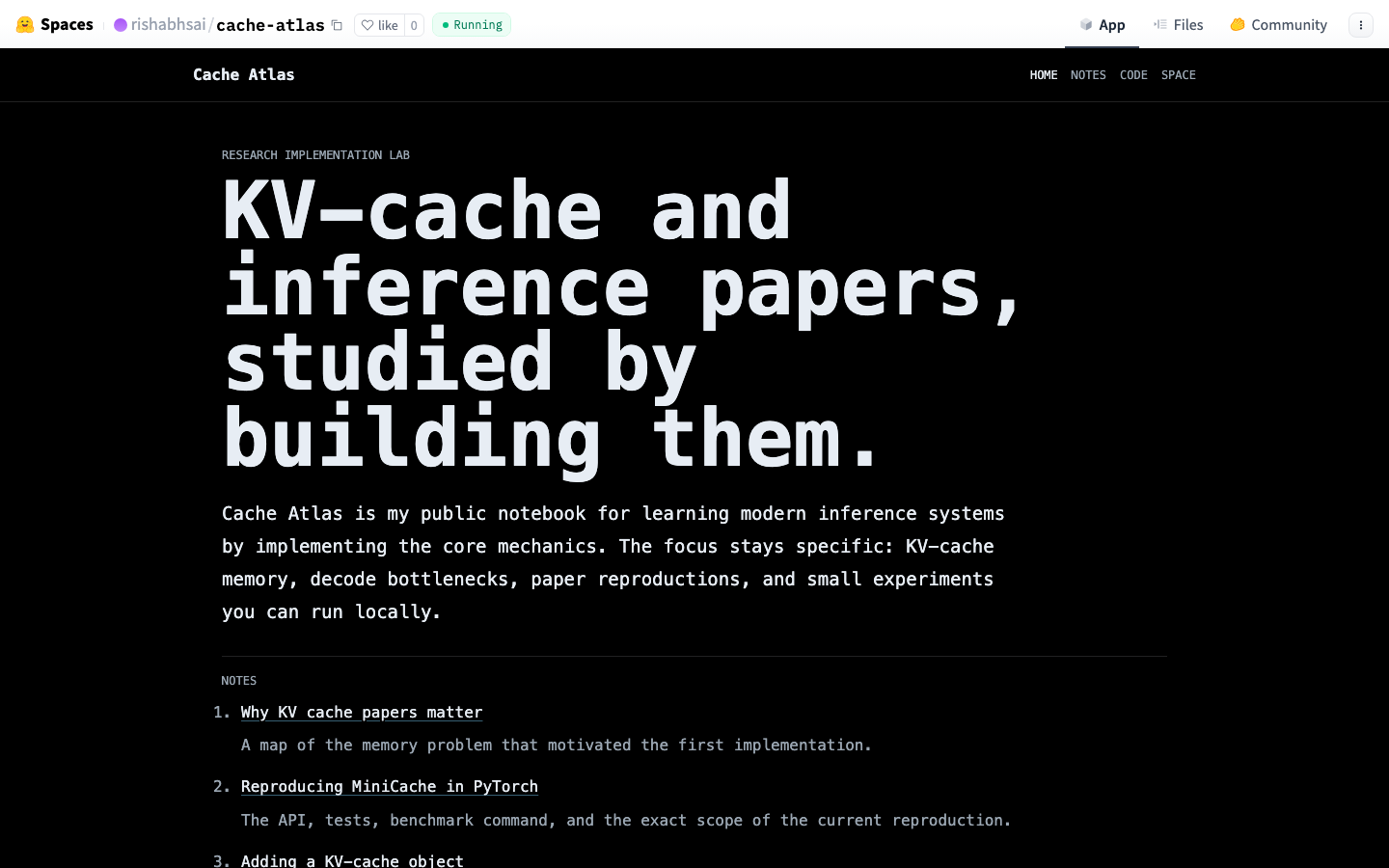
The Cache Atlas work started as a research question about LLM caching systems, but I did not want it to live only as a private notebook. Putting the experiment on Hugging Face forced a different standard: someone else should be able to understand the question, run the demo, and see the tradeoffs without me narrating over their shoulder.
That changed how I wrote and structured the project. Research demos need a product surface, even when the goal is exploration. The interface should reveal the variables that matter, make failure modes visible, and avoid pretending that a lab result is a production guarantee.
The most useful part of making the work public was compression. If I could not explain the caching behavior clearly in the demo and supporting notes, I probably did not understand the tradeoff well enough. Public research artifacts force sharper thinking because the artifact becomes part of the argument.
I now think of small research demos as a bridge between experiments and products. They are not just proof that something runs. They are a way to make technical judgment visible.
takeaways.
- A research demo should expose assumptions, not hide them.
- Public artifacts improve the quality of technical explanations.
- The interface is part of the research communication.